How Vietnam's Political System Works
Vietnam surprises visitors not only with its beaches and food, but with how calm and predictable daily life feels. Behind that lies a distinctive political system — one party, yet with its own «pillars» and checks. Here is a friendly, plain-language guide to how Vietnam is run in 2026, and what is useful to know as a traveller.
One party at the centre
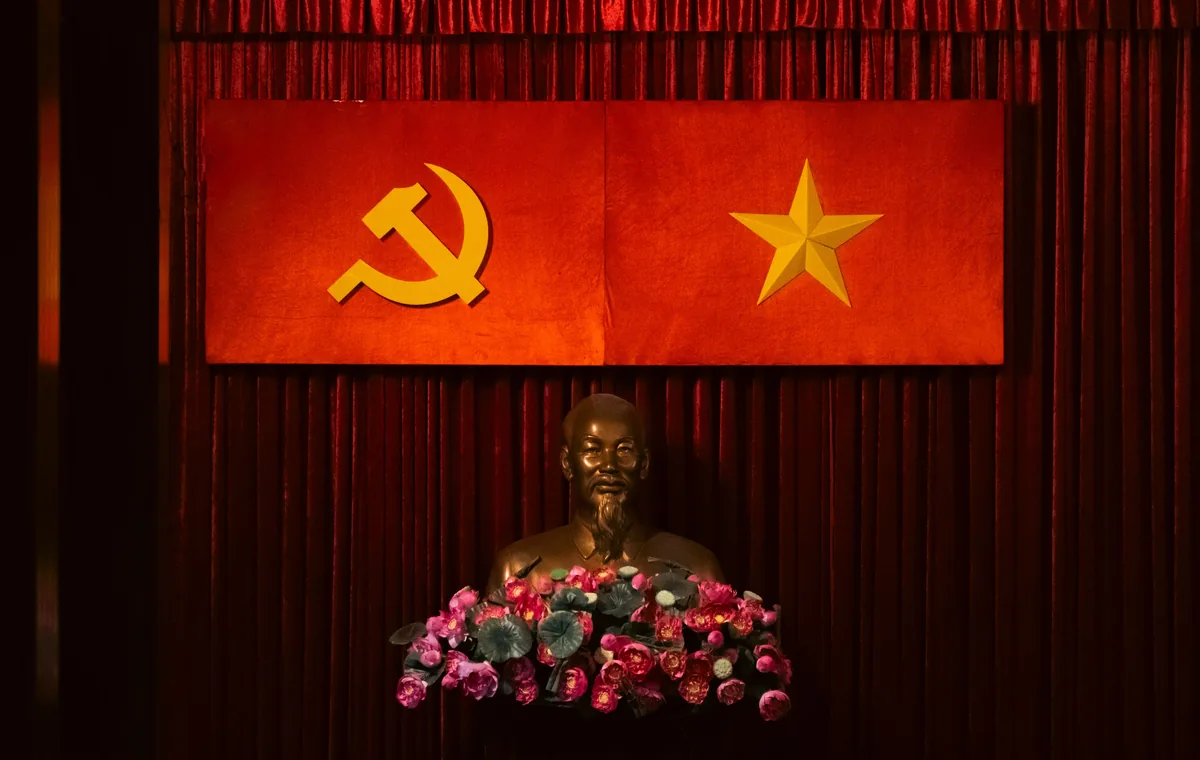
Vietnam is a socialist republic in which the Communist Party of Vietnam (CPV) plays the leading role. The constitution names it the guiding force of state and society, and its decisions set the country's overall direction.
The party's core principle is «democratic centralism»: issues are debated internally, but once a decision is made everyone follows the common line. To keep power from concentrating in one person, Vietnam has traditionally favoured collective leadership, with the top posts held by different people.
The «pillars» of power: who's who
The top of the system is known as its «pillars». For a long time there were four: the CPV General Secretary (head of the party), the President (head of state), the Prime Minister (head of government) and the Chair of the National Assembly (head of parliament). In autumn 2025 a fifth pillar was added — the Standing Member of the Secretariat, the General Secretary's right hand for day-to-day party work.
In 2026 the line-up is: General Secretary Tô Lâm, who also took the presidency in April 2026; Prime Minister Lê Minh Hüng (since April 2026, for the 2026–2031 term); and National Assembly Chair Trân Thanh Mân. One person holding both the party and state top jobs is a notable shift from the usual separation, and observers are watching it closely.
The National Assembly — the country's parliament
The National Assembly is the highest representative body. It has around 500 deputies elected for five years. It passes laws and the budget, approves major projects and formally elects the President, Prime Minister and other senior officials.
Elections are direct: people vote for both Assembly deputies and local People's Councils. Candidates, however, are pre-selected by the Fatherland Front — a broad party-led coalition — so the final list narrows well before voting day.
The Assembly works in sessions, usually twice a year, and in recent years deputies have debated laws, the budget and ministers' performance more openly. Sessions are broadcast, and the government «question time» has become a visible part of political life.
A Party Congress every five years
Every five years the CPV holds a Congress — the country's main political event. It reviews progress, chooses the leadership and sets the course for the next five years. The most recent, the 14th Congress, took place in January 2026 and confirmed Tô Lâm at the head of the party.
The Congress is where big goals are set — such as faster growth and ambitious development targets. For business and investors it is a useful signpost to where the country is heading.
The Politburo and Central Committee: where decisions are made
Between congresses, two party bodies steer the course. The Central Committee — around 180 members — meets in plenums several times a year to decide major questions. Day-to-day leadership rests with the Politburo, a small circle of roughly 15–20 of the country's most influential people.
It is in the Politburo that key decisions take shape, later carried through the state and the National Assembly. This link shows how party and state in Vietnam are closely intertwined, yet operate by clear, well-established rules.
Doi Moi: how reform opened the country
To understand modern Vietnam, it helps to know the phrase «Doi Moi» (Đổi Mới — «renovation»). These are the reforms launched in 1986 at the 6th Party Congress, which for the first time officially recognised a «multi-sector economy» — room for private business and the market.
Those reforms turned a poor post-war country into one of the world's fastest-growing economies. Doi Moi is why visitors today see modern cities, good services and a warm welcome for foreigners.
The course continued: in 2007 Vietnam joined the World Trade Organization, signed dozens of trade deals and became one of the world's manufacturing hubs. Today major international companies move their factories here.
Local government: the new 2025 map
In 2025 Vietnam carried out its biggest administrative reform in decades. From 1 July the number of provinces and centrally-run cities was cut from 63 to 34, and the district tier between province and commune was abolished.
Local government is now two-tier: province and commune (or urban ward). The aim is simpler, cheaper and faster administration.
Khanh Hoa and Nha Trang on the new map
This reform directly affected Nha Trang. On 1 July 2025 the provinces of Khanh Hoa and Ninh Thuan merged into a single, larger Khanh Hoa province, with its administrative centre in Nha Trang.
The combined region joins resort-rich Khanh Hoa with energy-focused Ninh Thuan (wind and solar power). Authorities aim to make Khanh Hoa a centrally-run city by 2030 — raising the region to the level of Da Nang.
For a visitor this means the whole resort region — from Nha Trang to Cam Ranh and further south — is now run from one centre, with airport, road and tourism plans coordinated together.
Stability and safety for visitors
For a traveller, the main upshot of this system is predictability. Vietnam is considered one of the calmest and safest countries in the region: low street crime, stable government and clear rules.
That stability is one reason tourists come with confidence and foreign companies set up shop. Life moves at an easy pace, and resort cities like Nha Trang keep their relaxed rhythm.
What's useful to know as a tourist
Vietnam is friendly to visitors, and politics won't get in the way of your holiday. Simply respect local laws and culture, as you would anywhere.
It's wise to treat national symbols with respect and avoid joining political activities — a sensitive area for locals. Otherwise the country is open, welcoming and very comfortable for a holiday.
And if you'd like to add a little celebration to your trip, we can help. In Nha Trang we deliver fresh bouquets and helium balloons the same day — to your hotel, villa or dinner table. Message us on WhatsApp, Telegram or KakaoTalk, and we'll make the moment beautiful.