
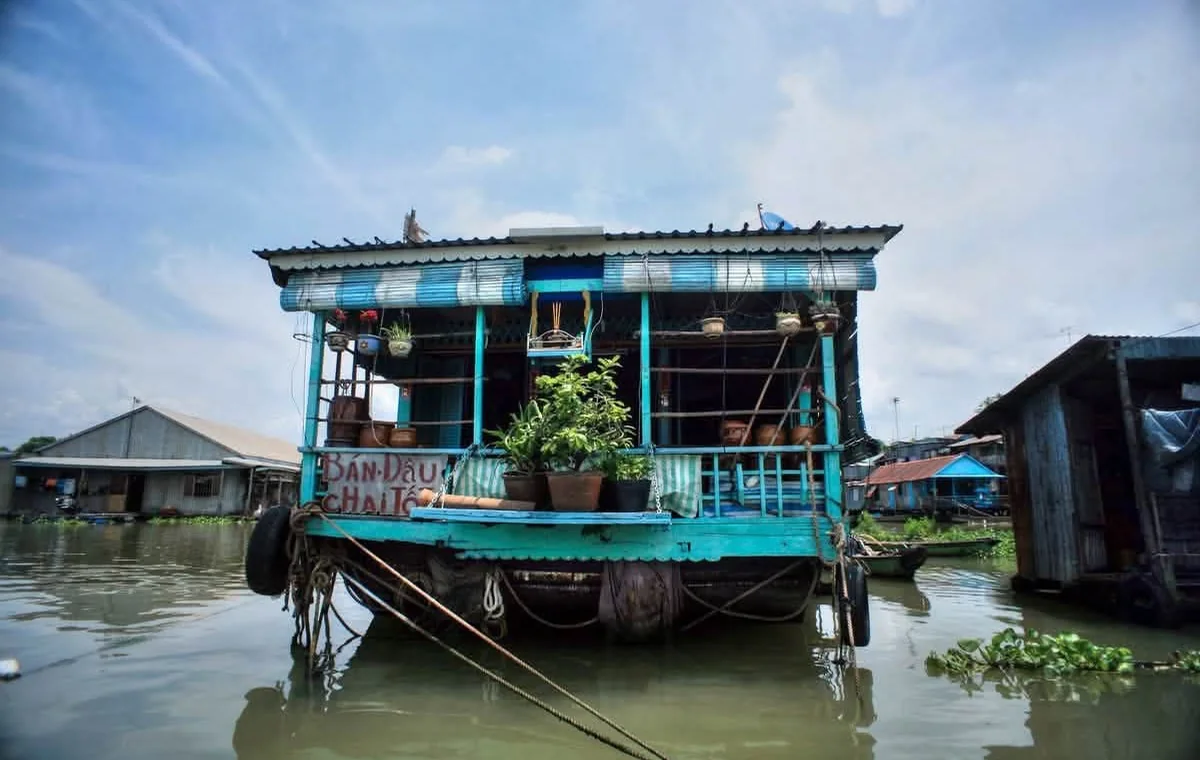
Chau Doc floating fishing village: life on the water in the Mekong Delta
Whole streets of houses swaying right on the river, and under each house a cage full of fish: this is the Chau Doc floating village in the Mekong Delta, one of southern Vietnam's most unusual sights. Here is how it works, where it came from, how it lives today and whether it's worth a stop on a trip around the country.
What the Chau Doc floating village is
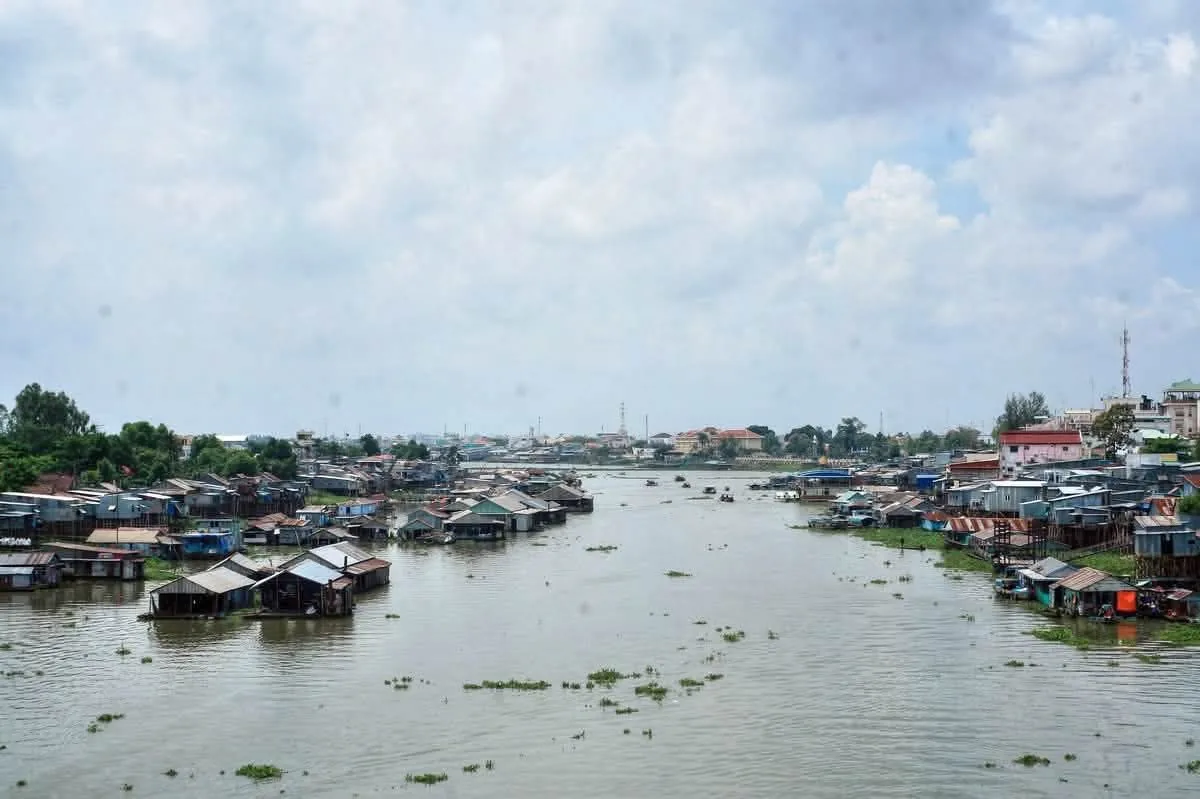
Chau Doc is not a village in the usual sense but dozens and hundreds of houses standing right on the water of the Hau River, a branch of the Mekong. Each house floats on empty barrels or pontoons, and beneath it, right in the river, sits a cage where the owners raise fish. People here live, trade and work almost without setting foot on land.
Where it is
The village lies about 3 km upstream from the centre of Chau Doc city, in An Phu district of An Giang Province — in south-western Vietnam, near the border with Cambodia. This is the deep Mekong Delta: water is everywhere, and a boat often replaces both the car and the motorbike.
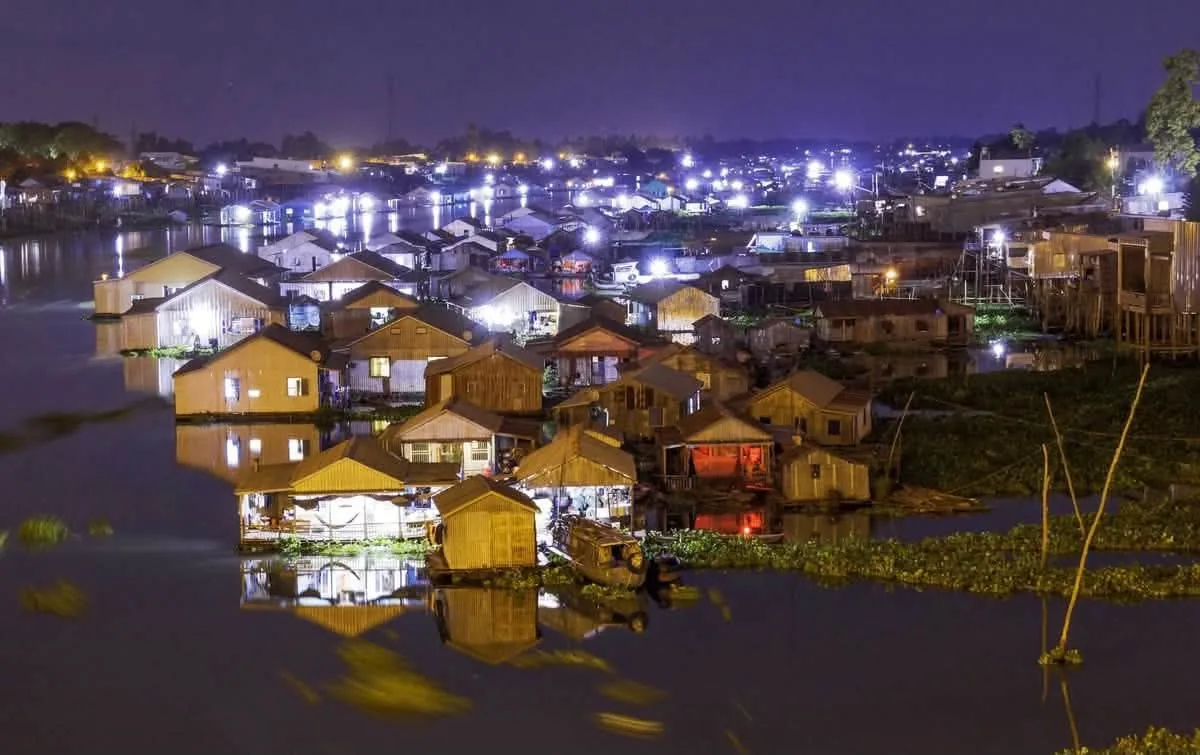
History: from the 1960s to its heyday
The floating village took shape in the 1960s as a settlement of freshwater fish farmers. At first there were only a few rafts where the fish were barely fed — the river provided food itself. From the 1970s the business grew, and its real heyday came in 1990–2005: the number of floating houses rose from about 100 to 2,000, and the annual catch reached up to 20,000 tonnes of fish.
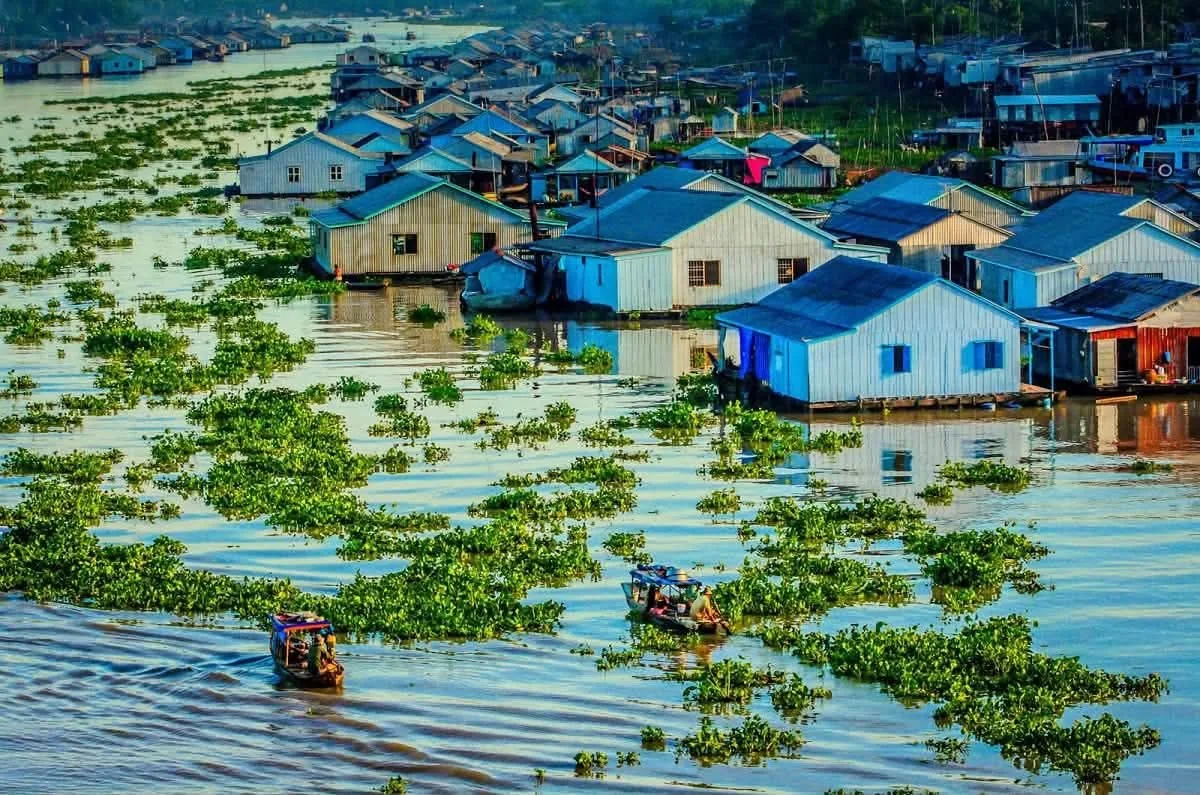
How a floating house is built
The house floats, but the key part is hidden underwater. Beneath the home is a large cage about 5 metres deep, made of sturdy wood and wrapped in steel mesh. The fish live in this underwater pen and are fed straight through a hatch in the floor. In effect, the family lives right above its own farm.
Basa — the symbol of Chau Doc
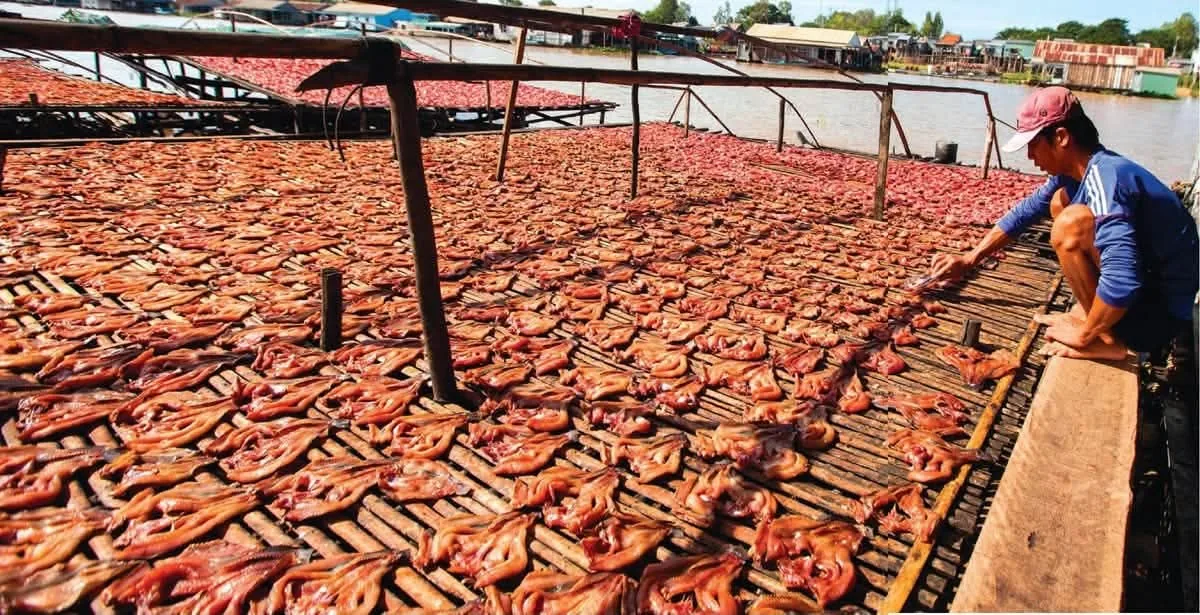
The village's main fish are basa and the related pangasius (shark catfish). During the boom years most of the catch was exported to North America and Western Europe. Basa made these places so famous that it became the unofficial symbol of Chau Doc city.
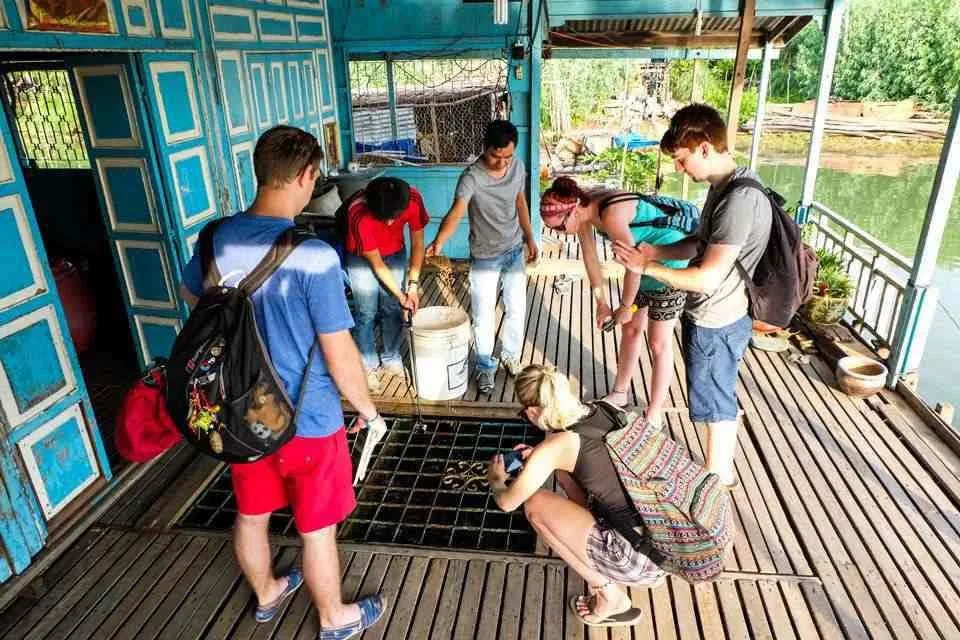
Feeding the fish — the main 'show'
The most spectacular moment for a visitor is feeding time. When the owner throws feed into the hatch, the water under the house literally boils: hundreds of fish rush to the surface at once. Many tourist boats deliberately time their visit to the feeding — it's worth it.
Life right on the water
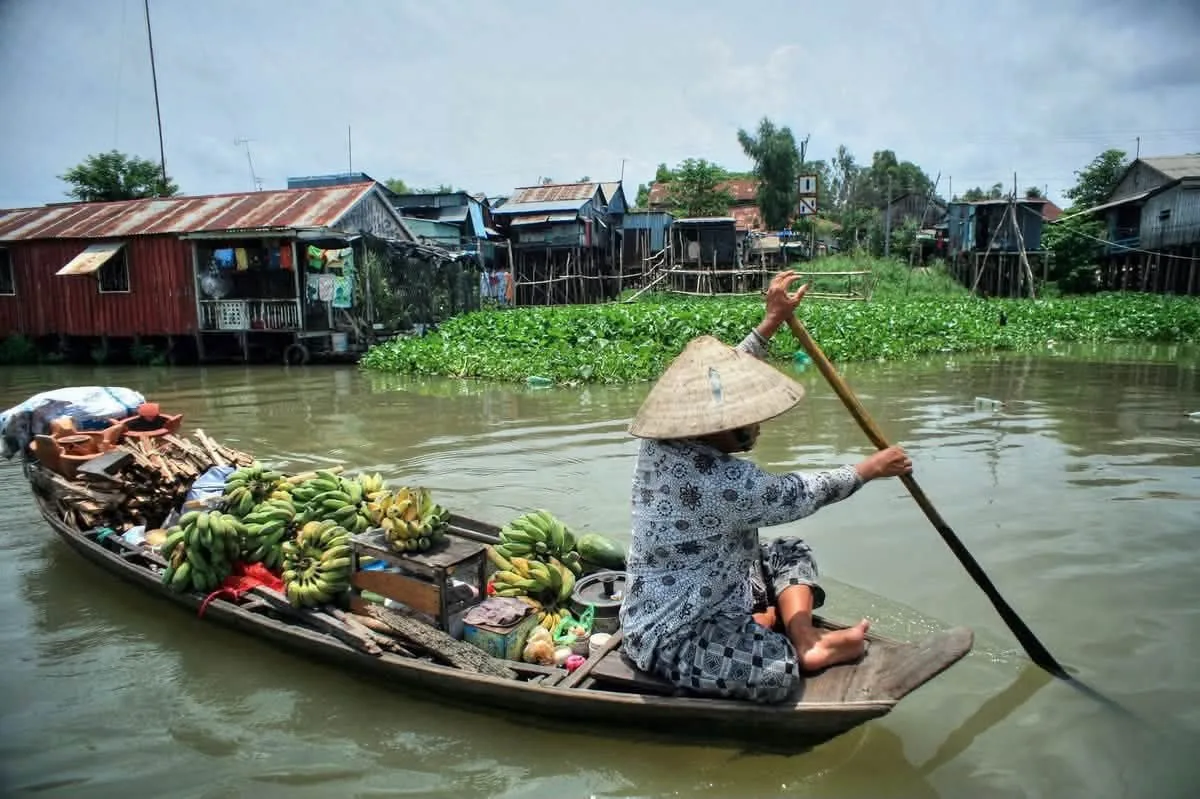
The floating village is a whole world on the river. Boats dart between the houses, floating shops sell everything you need, children travel to school by water, and laundry dries right above the river. Life is modest but remarkably self-sufficient: almost everything needed for daily life is close at hand.
The floating market and Cham villages nearby
Near the village are the delta's famous water markets, where people trade straight from boats loaded with fruit and vegetables. Along the banks of Chau Doc live the Cham people, with their own villages, mosques and weaving traditions. All of this is often combined into a single boat tour.
Challenges today
Life on the river is getting harder. Climate change, hydropower dams upstream on the Mekong, flooding and water pollution are hurting the fishing trade — catches have become unstable. Some families are moving from the water to the shore, so the village is slowly changing, and its traditional way of life is best seen now.
Worth a stop for a Nha Trang visitor?
Chau Doc is a completely different Vietnam: not the sea as in Nha Trang, but an endless river delta. The journey is long, but if you are planning a big trip around the country that includes the Mekong Delta, the floating village is one of its most atmospheric moments. And back in Nha Trang, it's nice to mark the trip with a beautiful bouquet.
We'll bring a fresh bouquet or helium balloons to a hotel, villa or office across Nha Trang and northern Cam Ranh the same day — a nice touch to your travel memories. Message us on WhatsApp, Telegram or KakaoTalk. Based on material by Explore Chau Doc Long Xuyen An Giang.