Little-known facts about Vietnam: what will surprise you
For many, Vietnam means beaches, pho and coffee with condensed milk. But behind that postcard image hides a country full of surprises: with the largest cave on the planet, a cat instead of a rabbit in the zodiac, and money without a single coin. We've gathered the most curious, little-known facts about Vietnam — a country of almost 100 million people.
Inside Vietnam is the largest cave on Earth
In Quang Binh province lies Son Doong — the largest cave in the world. Its main chamber is so huge that a 40-storey skyscraper would fit inside, and in places a whole block of high-rises.
The most astonishing part: the cave has its own jungle, river, clouds and even its own microclimate. It was found by chance in 1991 and only fully explored in 2009. It's the only cave on the planet with a genuine primeval forest inside.
Almost every other person is a Nguyen
If you shout 'Nguyen!' in Vietnam, half the street will turn around. It's the most common surname in the country — borne by around 40% of the population. No surname anywhere else in the world dominates quite like it.
The reason is historical: people took the name en masse in honour of the ruling Nguyen Dynasty (1802–1945), and earlier, to blend in when power changed hands. That's why you can hardly find anyone by surname here — people go by their given name, which comes last.
The Vietnamese alphabet was invented by Europeans
Unlike their neighbours with their characters, the Vietnamese write in the Latin alphabet — letters much like ours, only with a wealth of marks above and below them. This script is called chữ Quốc ngữ.
It was created by Catholic missionaries in the 17th century to make writing Vietnamese speech easier; the best known is the Frenchman Alexandre de Rhodes. It only became official in the 20th century — and now Vietnam is one of the few countries in Asia that writes in Latin script.
A cat instead of a rabbit in the zodiac
The Vietnamese zodiac is almost the same as the Chinese one, with one charming difference: the Year of the Rabbit is replaced here by the Year of the Cat. So Vietnamese born in a 'rabbit' year consider themselves cats.
The exact reason is disputed — perhaps it's down to the similarity of words in an older language, or simply a local fondness for cats. Either way, it's a small but striking cultural quirk that the neighbours don't have.
A coffee superpower and 'egg coffee'
Vietnam is the world's second-largest coffee exporter after Brazil and the main supplier of strong robusta. Coffee here is everywhere, and in the most unexpected forms.
A local invention is 'egg coffee' (cà phê trứng): strong coffee under an airy cream of whipped egg yolk, sugar and condensed milk, tasting almost like a dessert. It was invented in Hanoi when milk was scarce — and became a local legend.
The king of pepper and cashews
Few people know it, but Vietnam is the world leader in two products at once. It exports more black pepper than anyone in the world (around 40% of global volume) and more cashew nuts than anyone.
In other words, the pepper in your grinder and the cashews in your packet may well have come from here. For a country more often remembered for coffee and rice, that's a genuinely unexpected title.
A nation on motorbikes
Vietnam's main form of transport isn't the car or the metro, but the motorbike. There are around 77 million of them in the country — almost one per adult. Rivers of scooters on the roads are one of Vietnam's defining images.
People carry everything on a motorbike: a family of four, a fridge, cages of ducks and, of course, bouquets. Crossing the road through a flow of scooters is an art in itself: walk slowly and without stopping, and the flow simply parts around you.
Money without a single coin
The Vietnamese currency — the dong — exists only as banknotes. There are simply no coins in circulation: they were issued briefly in the 2000s but never caught on and quickly disappeared.
What's more, the notes here are plastic (polymer) — you needn't fear getting them wet. The zeros scare tourists at first: 100,000 dong sounds impressive, though it's only about four dollars.
54 peoples under one roof
Vietnam is far more diverse than it seems: officially the country is home to 54 peoples. The largest is the Kinh (Viet), around 85% of the population, while the other 53 are dozens of distinct cultures, languages and costumes.
Many of the smaller peoples live in the mountains of the north and in the Central Highlands, keeping their traditions, crafts and bright clothing. Together they speak more than a hundred languages — a true mosaic under one flag.
One holiday matters most — Tet
The main holiday of the year isn't New Year on 1 January, but Tet, the Lunar New Year (usually on the same days as the Chinese one). For several days the country literally pauses: shops close and everyone travels to their family.
Tet is welcomed with peach and apricot branches, special dishes and wishes of luck. Flowers in these days are an essential part of the celebration: they decorate homes and are given to loved ones as a symbol of a new beginning.
What it means for a visitor to Nha Trang
Vietnam is fascinating to discover beyond the beaches: behind every coffee, scooter and banknote hides a story of its own. And the more such details you notice, the warmer you feel towards this country.
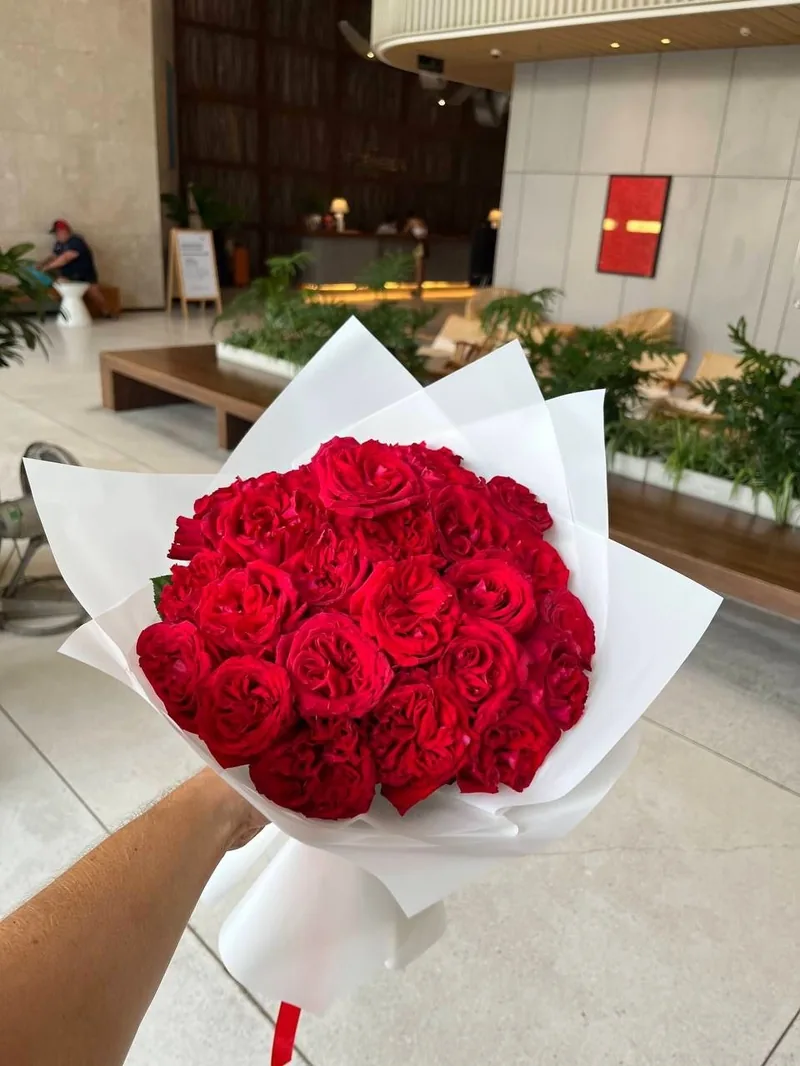
And if you'd like to delight a loved one, partner or friend right here — we'll deliver a fresh bouquet or helium balloons to a hotel, villa or office from the next day. Message us on WhatsApp, Telegram or KakaoTalk.