
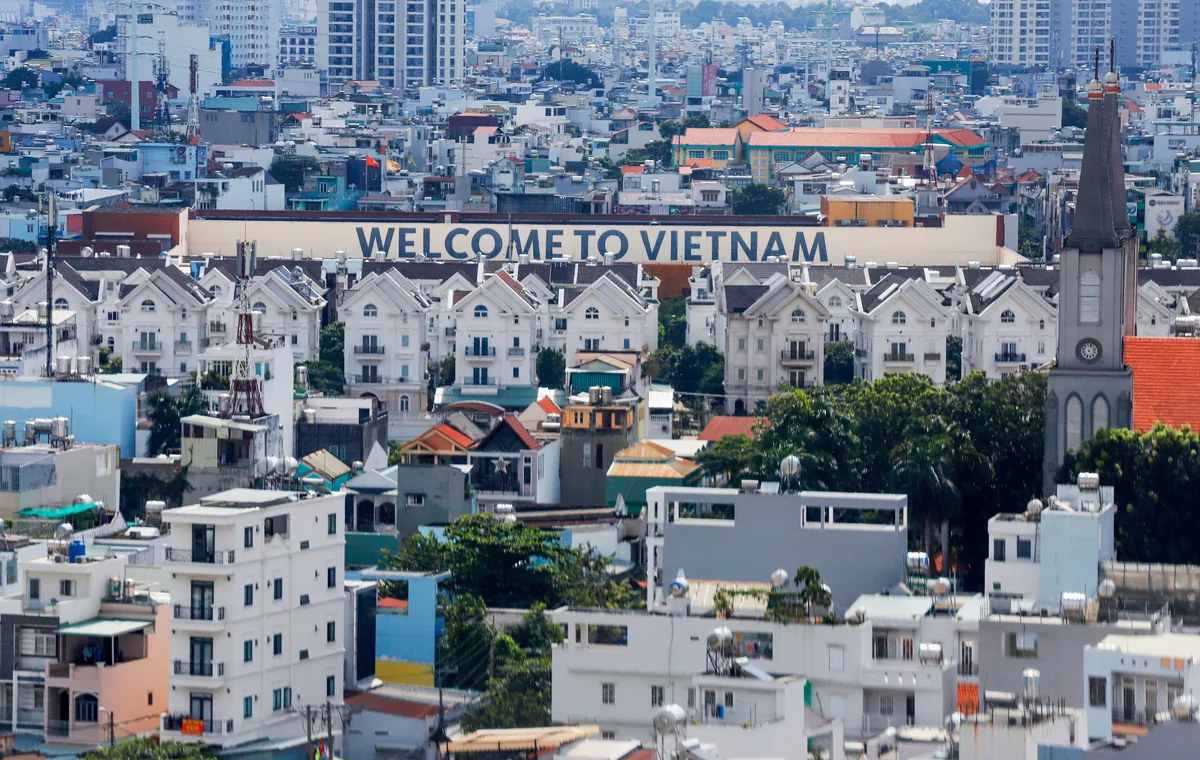
How Vietnam Embraced the Era of the AI Boom
A couple of years ago Vietnam was best known for garment factories and beaches. In 2026 it has become one of the fastest-growing AI hubs in Southeast Asia. NVIDIA-powered data centres, a national strategy to 2030, billion-dollar investment and home-grown "AI factories" — it is all happening right now. Here is a no-fluff look at how Vietnam is entering the era of artificial intelligence and why the world is paying attention.
What the "AI boom" in Vietnam means
Vietnam is making a deliberate state-level bet on artificial intelligence. A few numbers to grasp the scale:
- 🤖 Google projects AI could add $79.3 billion to Vietnam's economy by 2030 — about 12% of GDP.
- 🏭 NVIDIA and FPT are building a $200M "AI factory" in Hanoi.
- ⚡ Data-centre capacity is set to grow from ~525 MW (2025) to nearly 1,000 MW by 2030.
- 🎯 The goal: become the AI leader of Southeast Asia by 2030.
For a country long seen as the world's assembly line, this is a change of league — from manufacturing to its own compute and models.
NVIDIA enters Vietnam
The key event of the boom is the arrival of NVIDIA, the global leader in AI chips. The company signed a memorandum with Vietnam's Ministry of Planning and Investment to set up two centres at once:
- 🔬 The Vietnam Research & Development Center (VRDC) — billed as one of NVIDIA's largest AI research centres in the world.
- 🗄️ A modern AI data centre for training and running models.
In parallel, NVIDIA partnered with FPT (a $200M AI factory training 30,000 students) and with Viettel, which launched Vietnam's first enterprise AI data centre on NVIDIA H200 chips and a DGX B200 supercomputer — the first AI data centre in Asia-Pacific certified to the Uptime Tier III standard.
Data centres: the infrastructure race
AI is impossible without hardware and electricity, so a genuine data-centre race has broken out across Vietnam:
- 🏗️ Total data-centre capacity will nearly double by 2030.
- ☁️ The cloud market — up to $1.24B in 2025 and around $2.5B by 2029.
- 🏢 Big players — Viettel, FPT, CMC (a $250M data centre) — are building national infrastructure.
- 🌐 The country's goal: three national data centres.
Affordable power, a strategic location and state support are turning Vietnam into a new magnet for AI-infrastructure investors.
National strategy and money
The main engine of the boom is the state itself. Vietnam is not waiting for AI to arrive — it is actively subsidising it:
- 🏅 National strategy: create five regional AI brands by 2030.
- 💰 In 2025 an off-budget fund was launched to back AI startups, SMEs and investors.
- 🧾 The state covers up to 50% of initial R&D costs in AI and semiconductors.
- 🔌 Semiconductors: 174 FDI projects, a market heading toward $31B by 2027.
This package of incentives is rare in the region — and it is exactly what draws in the world's tech giants.
Who is building Vietnam's AI
Behind the boom are both local tech giants and global players:
- 🇻🇳 FPT — an AI factory with NVIDIA, the latest H100/H200/B300 chips, reaching the global market.
- 📡 Viettel — an H200 AI data centre and the Vietnam AI Open Hackathon 2026 with NVIDIA.
- 🏢 CMC — a $250M data centre being called the country's future "AI heart".
- 🌎 Google — weighing Vietnam's first data centre by a major US tech firm and shifting part of its Pixel production there.
Around them an ecosystem of startups, accelerators and training programmes is forming — the AI engineers of tomorrow.
What it means for Vietnam
The AI boom is not only server racks — it is jobs, education and national reputation:
- 🎓 The FPT–NVIDIA programme alone is training 30,000 students for AI work.
- 📈 AI's projected contribution — about 12% of GDP by 2030.
- 🌏 Vietnam is aiming for the top tier of AI leaders in Southeast Asia.
If the bet pays off, the country will move from "the world's factory" toward a knowledge economy — and the 2026 AI boom will be the starting point.